Have you ever looked up at a massive rock face and wondered how people get to the top of it? Or are you a single-pitch climber ready to take on the big leagues with your sights set on Yosemite? A rock climbing portaledge is the simple answer to any of your big wall questions! While there are many options out there to help you conquer your mountain, this guide will help with finding the best portaledge possible.
A Brief History
The roots of modern rock climbing all trace back to Yosemite National Park; whether its bouldering, leading and top-roping, or the coveted big wall climbing, the granite cliffs in Central California inspired them all.
While today it's not at all uncommon for people to summit walls like Half Dome or El Capitan in a single push (or 1 hour and 58 minutes if you're Alex Honnold and Tommy Caldwell) the first ascents took several grueling days. Pioneers of the sport relied on natural ledges to rest, which was not only uncomfortable but also made it impossible to sleep without reaching a specific feature on the rock.
Single Point Suspension Hammock
As more and more people sought to establish routes up the cliffs in Yosemite, alternative sleeping arrangements started to pop up. Warren Harding is credited with inventing the first single point suspension hammock, which was revolutionary at the time. Traditional hammocks were common initially, but they weren't ideal because of their tendency to roll upside down and rudely wake a climber from their snooze. Anchoring the hammock from a single point eliminated that possibility, and since then the single point suspension model has proven to be the best.
Hammocks radically improved an individual's sleeping experience during large climbs because they could be set up at any anchor point, but they weren't very comfortable over long periods of time and were hard to insulate.
In an effort to find a better way to rest on route, climbers stole steel and canvas cots from the lodges in Yosemite and repurposed them to hang from the side of the wall. The cots provided more stability than hammocks and allowed climbers to comfortably sleep, stand, or sit. The biggest downside, however, was the difficulty of transporting it up the wall due to its weight.
Gregg and Jeff Lowe fixed that issue by inventing a collapsible cot, and since then all iterations of the portaledge have featured that design. Portaledges have evolved since those early attempts at multiday summits, but the overall concept has remained the same and are based off those first cumbersome cots.
Portaledges 101
So you've decided you're ready to go on a big wall adventure. What now?
Just like with any piece of equipment, it's crucial to have a thorough understanding of a portaledge before you take it out into the backcountry. Knowing how and when to use one can make all the difference during your climb, especially in a big wall scenario when the stakes are higher.
Portaledges vs Belay Ledges
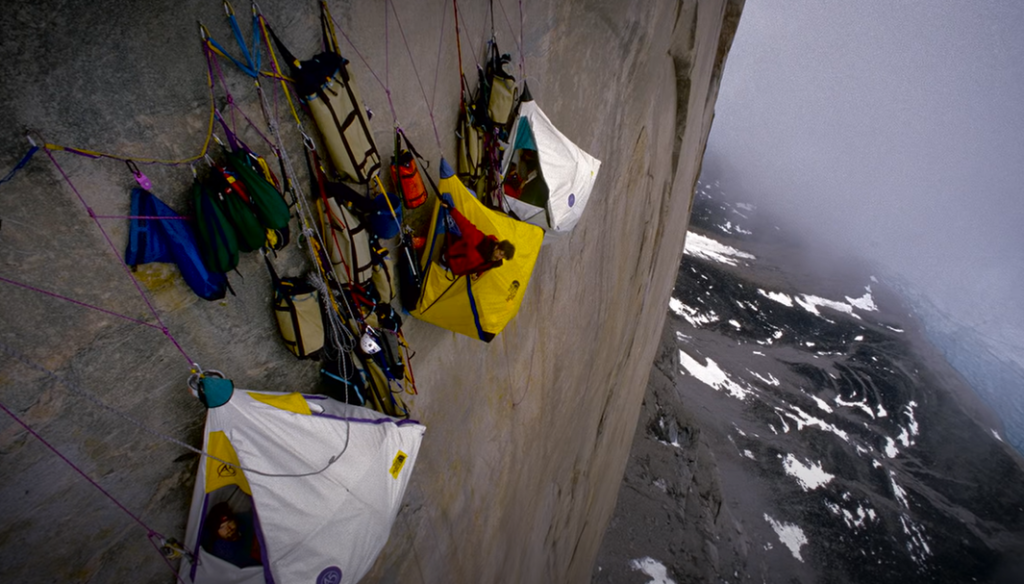
The purpose of a portaledge is to sleep on overnight, but they can be used in several different ways as well.
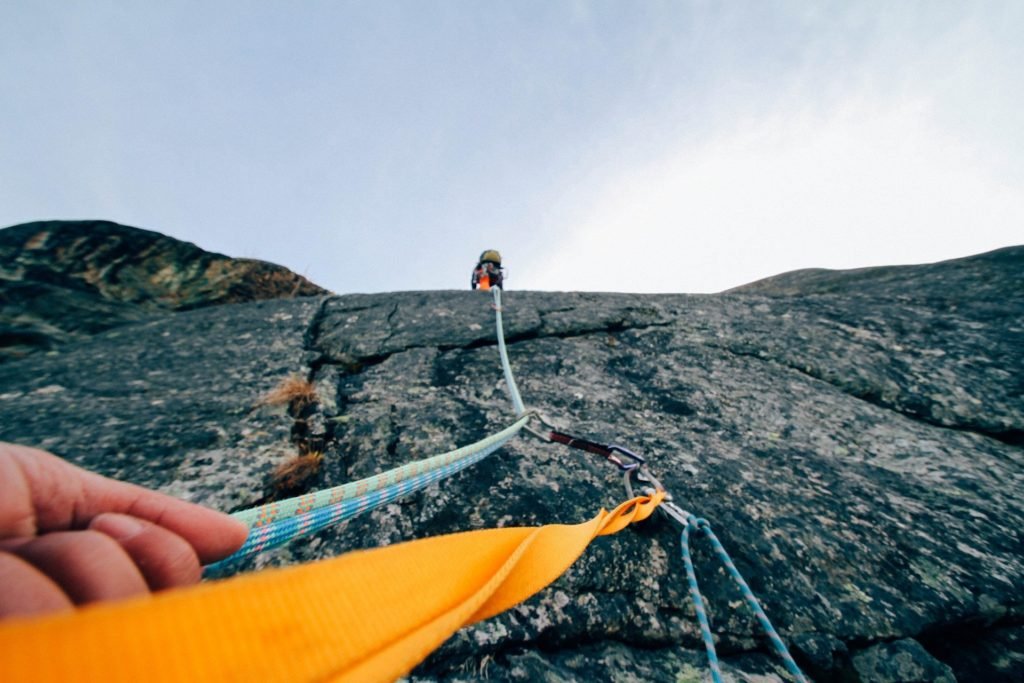
A "pitch" in a rock climb refers to a single rope length. Most climbs have set anchor points along the wall, or points with two metal bolts side by side that you can clip the rope into and sit back - that being said, it is also common for individuals to build their own anchors by placing removable gear into the wall. Anchors signify the end of a pitch; from there the climber can either descend in a single-pitch scenario or they can continue up for a multi-pitch route.
In a multi-pitch setting, the leader belays their partner from above once they reach the end of a pitch. Once both climbers are at the higher anchors they rearrange the rope and continue up to the top.
Belay Ledges
It is common for the belayer to sit or hang from the anchor as their climber completes the pitch. This is fine for short climbs but can be uncomfortable over long summits, especially if the climber is isolating a particularly challenging section so they can project it. In those scenarios, it's nice to have a belay ledge.
A belay ledge is a short platform that someone can sit or stand on in order to belay without weighting their harness. It typically looks like a smaller portaledge, but it's lighter and easier to set up since it'll typically only be used for a short period of time.
For climbs that are extremely challenging, like Tommy Caldwell and Kevin Jorgeson's historic ascent of the Dawn Wall in Yosemite, people opt to use a portaledge as a belay ledge in order to have more room. It is also common for film crews to use one when documenting a climb.
When to Use a Portaledge
Portaledges are necessary for climbs that cannot be completed from the ground to the top in a single push. If you plan on seeking solace from the black of night between pitches, then you'll need a portaledge.
Sleeping isn't the only thing they're used for, however! As mentioned above, portaledges are often used as belay ledges, especially when the lead climber is projecting a difficult section of the climb.
When you are working on an ascent for several days, your portaledge becomes a second home on the mountain. It's where climbers cook meals, call loved ones back home, reminisce over the best parts of the trip, and even use the bathroom!
How Does it Work?
Portaledges and belay ledges both work the same way: you hang it from an anchor and assemble the pieces.
The most challenging part is finding a comfortable way to hang above the metal and fabric in order to put it all together. Once you get that down though, the rest is easy.
Specific instruction varies from manufacture to manufacturer, but the basic concept is the same. Most portaledges are rectangular in shape with a nylon bed that stretches taut between aluminum bars. All designs use a single anchor point that all corners are attached to and that the climber remains hooked into in order to safely rest between pitches.
Setting up Your Anchor
The anchor is arguably the most complex aspect of a portaledge set up, which goes to show how simple the rest actually is. It is important to have proper knowledge of top rope anchor systems before adventuring- please seek out professional instruction if you need assistance!
Anchors use multiple points of contact in order to establish redundancy within the system; in the off chance that one point fails, there are others in place to hold the load.
It's generally a good idea to practice setting up your portaledge and the rain fly on the ground or on a low hanging bolt so that you'll be familiar with the process when you eventually apply it during your climb.
Things to Consider When Choosing a Portaledge
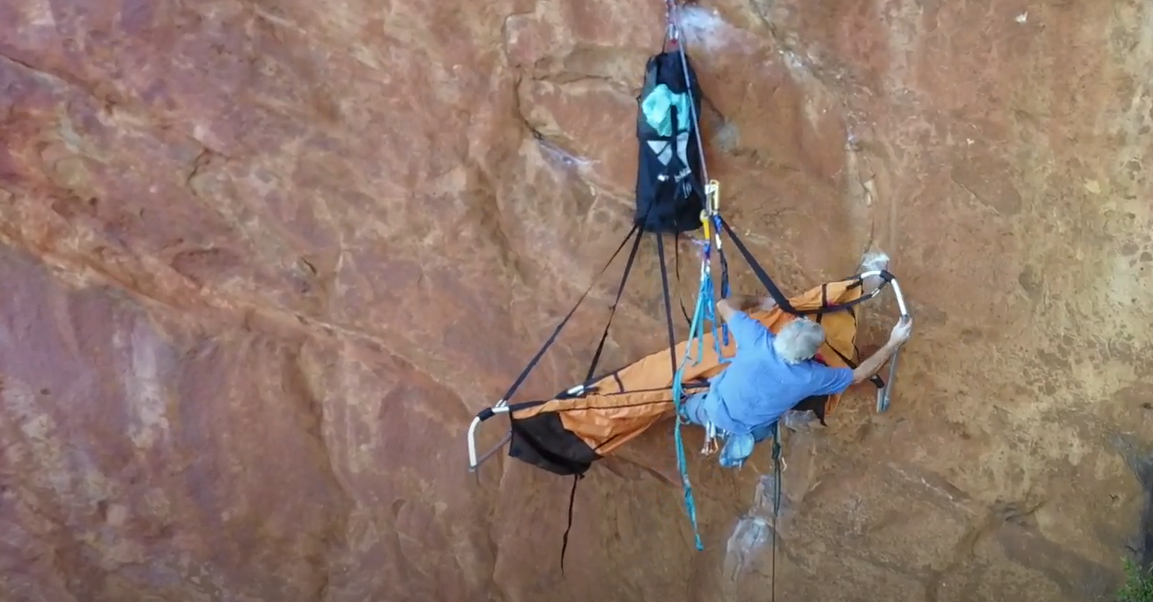
At their essence, portaledges are fancy rock climbing tents. While its true that the basic format of a portaledge is fairly consistent across various brands, there are still differences that make some ideal for specific circumstances.
Despite being a fairly niche item in the world of outdoor equipment, there are a variety of partaledges on the market to choose from. It's important to consider various factors of your adventure when picking out a rock climbing tent, just like you would with a traditional tent.
Ease of Setup
Not all portaledges are created equally when it comes to ease of setup.
For traditional four-bar ledges, there is often a specific order in which the parts need to be attached in order to keep the fabric tight and secure. Some brands use color coded bars and corner pieces in order to assist with this process.
The number of webbing riser straps also influence the ease of setup - more straps mean more minor adjustments in order to have a level platform. Be sure to also consider how to attach the rain fly when thinking about ease of setup.
Materials
Most modern portaledges use the same materials: anodized aluminum and double ripstop nylon.
The process of anodization increases the strength of the metal without sacrificing the inherently lightweight quality of aluminum. Climbers can trust the durability of their portaledge without having to break their backs from the weight of hauling it up with them.
Double ripstop nylon is one of the toughest fabrics out there, and as a result is used frequently for gear in the outdoor industry. It can be water-resistant or waterproof depending on how it's treated, and is extremely lightweight. This material is also commonly used for the rain fly of your portaledge.
Size
Climbing gear comes in a variety of sizes, and portaledges are no exception! There are two primary sizes on the market: a single or a double. This refers to the number of people that can comfortably sleep on the ledge.
In some instances it's advantageous for a single climber to purchase a double portaledge for additional storage space. Some parties of three opt for two doubles in order to store extra gear as well.
Weight
The last thing you want to do when you're climbing over a thousand feet of rock is haul up a heavy platform just to sleep on. After all, the food, water, and climbing equipment are heavy enough as it is! With that in mind, the weight of your portaledge is an important factor to consider before purchasing one.
Modern portaledges have come a long way from the stolen cots that originally graced the cliffs of Yosemite. The materials used to make ledges now were specifically chosen because of how lightweight they are.
It isn't always necessary to buy the lightest climbing gear on the market, but depending on the trip you have planned it might make a huge difference. If your objective lies high in the alpine and is projected to take an exceptionally long amount of time to finish, the weight of your portaledge can make all the difference. Consult with your climbing partner and consider the benefits of ultralight equipment compared to your budget.
Additional Features
The last factor to consider before purchasing your portaledge is whether or not it comes with any additional features.
Are you a chronic over packer, even during outdoor adventures? Look for extra pockets for storage, or daisy chains along the webbing riser straps so you can secure all of your equipment.
Not interested in getting too cozy with your climbing partner? Opt for a large divider instead of a small one so you can have your precious personal space.
What Happens When it Rains?
Climbers tackle big objectives regardless of the weather, and can be seen chipping away at a climb through rain and snow. Certain rock types dry faster than others, which means a rainy day doesn't have to put a stop to the adventure.
You'll need a rain fly in order to keep your party out there in the wilderness regardless of the weather. Just like with traditional tents, a climbing rain fly goes over your shelter in order to keep the elements out so you stay warm and dry. Some companies include a fly with the purchase of a portaledge, while with others the fly comes separately.
The Top 5 Climbing Portaledges
Now that you know the nitty-gritty behind choosing the best portaledge, let's go over the options! There are five options on the market that truly stand out from the rest.
1. Bomb Shelter Portaledge by Metolius


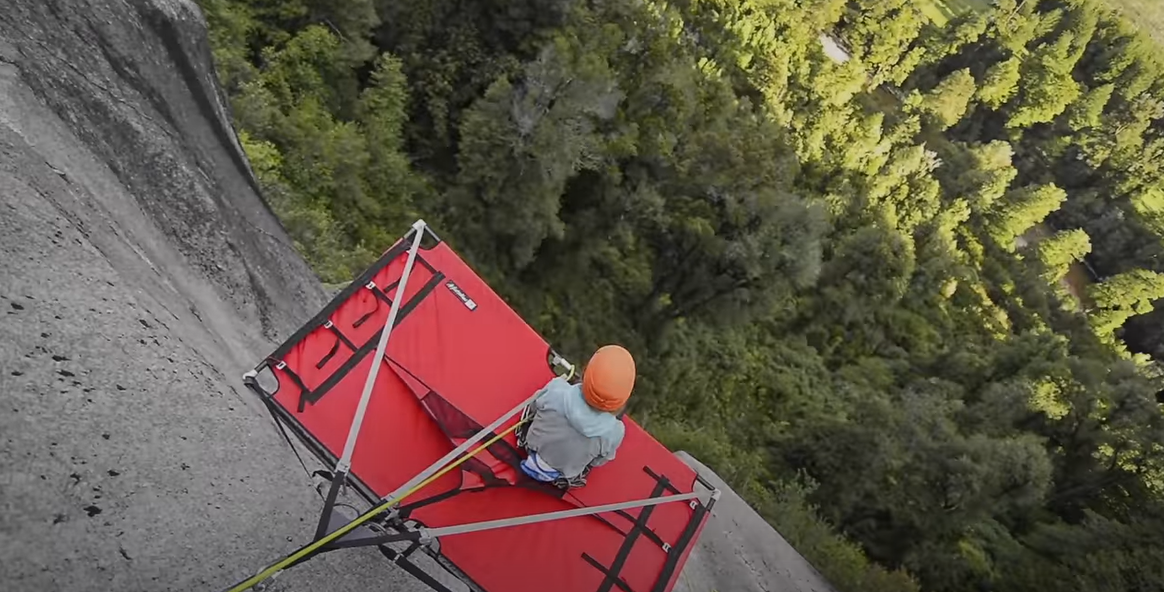
Metolius knows better than to mess with a classic, so their Metolius Bomb Shelter stuck to the basics in the best way. This bright red portaledge is available in a single or double orientation, which means you can customize your climbing set up based on how many people are in your party and how much equipment you're hauling.
The Metolius Bomb Shelter comes with a large spreader bar that can remain upright to put some distance between you and your partner or can fold down to maximize the lounge space. The same material used for the haul bag and the fly is strategically placed on the side bars to prevent wear and tear where it touches the face of the cliff.
What really sets the Metolius Bomb Shelter apart is its weight: the single is only 11.7 pounds, while the double comes out to 13.12 pounds. This is substantially lighter than the competitors, which is ideal for an alpine setting where everything adds up even more.
The Bomb Shelter comes with a Durathane haul sack, and you can purchase the rain fly with it or on its own.
2. Black Diamond Single Portaledge


Black Diamond claims to make the strongest and most reliable option on the market. Their single portaledge is slightly heavier than the Metolius Bomb Shelter at 14.15 pounds, but what you sacrifice in weight you gain in durability.
The Black Diamond single portaledge doesn't have many daisy chains for storage, but the black and gold color coded straps make set up easy and intuitive.
We also recommend to purchase the Black Diamond Deluxe Single Fly.
3. Black Diamond Cliff Cabana Double Portaledge
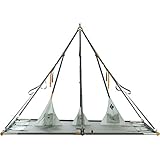

If you have a party of two or are a single individual with a lot of supplies, the Black Diamond Cliff Cabana double portaledge is the item for you!
The biggest difference between the Black Diamond single portaledge and the Cliff Cabana double is the abundance of storage. Unlike the single, the Cliff Cabana has a modified version of a spreader bar with three small triangles as opposed to one large division. There are also two small mesh pockets on each triangle for a total of six options for stashing small items.
All of the extra nooks and crannies are ideal for over packers but they do add up. At 19.13 pounds, the Cliff Cabana isn't for the faint of heart but it doesn't come with a rain fly.
We highly suggest the Black Diamond Double Deluxe Cliff Cabana Fly for the wet weather.
4. The G7 Pod
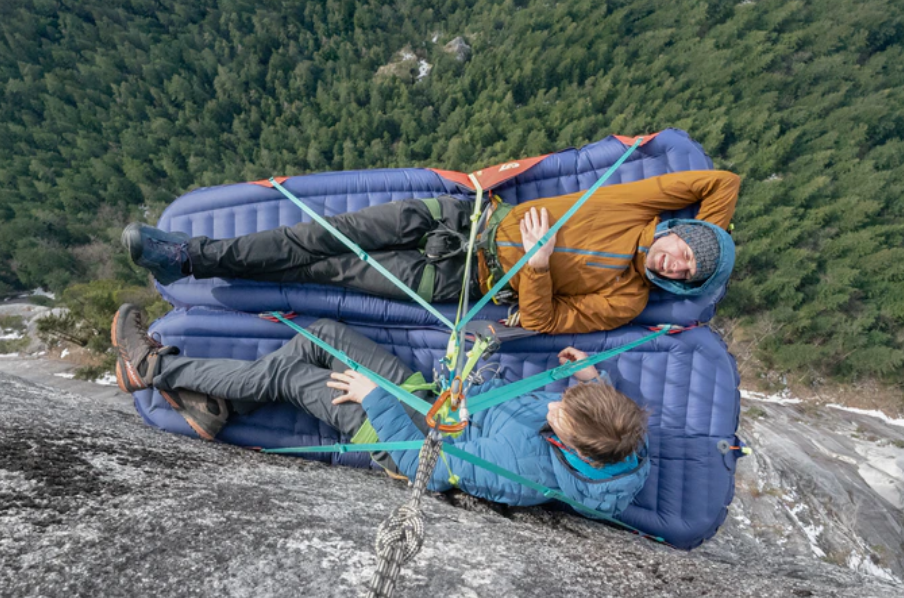
Grade 7 (or G7) has a reputation for being one of the most innovative brands in the industry. Their Pod is a bold way to create an ultralight portaledge without reducing resilience. At only 3.5 pounds, the G7 Pod has revolutionized the portaledge industry.
Instead of using aluminum rods with a nylon bed, like most portaledges, the Pod is inflatable. Not only does this cut down on the weight of the portaledge, it also saves weight in that you don't need to also bring a sleeping pad - the ledge itself doubles as one!
Included with your purchase is an inflation sac that you use to blow up the Pod, which also doubles as a pillow and the stuff sack. The best part of the Pod is the variety of ways it can be configured. You can put two side by side to emulate a double portaledge, go solo in the single configuration, or have space from your partner by setting it up bunkbed style.
The Pod is also the most colorful portaledge out there; it comes in a vibrant red and blue instead of the standard black or gray.
The Storm Shelter rain fly is sold separately and provides a quick, weather-proof seal to your cliffside home.
5. FISH Double Whammy Portaledge
FISH has been making climbing equipment since 1983 and have been fan favorites for just as long. They also have the longest selling designs out there for certain pieces of equipment.
The FISH Double Whammy portaledge is the lightest aluminum and nylon option on this list. It weighs in at 8.4 pounds for the single without the fly and 12.5 pounds for the single with the fly, and 9.3 pounds for the double without the rain fly and 14.5 pounds for the double with the fly.
You can find the perfect combination of support, comfort, and durability in the FISH Double Whammy. The biggest downside is it can only be purchased directly from the manufacturer, but luckily the turnaround time isn't bad.
The Best Portaledge for Big Wall Climbing
It was hard to choose a winner, but the best option out there is the Metolius Bomb Shelter!
What made the Metolius Bomb Shelter portaledge stand out was the weight and the design.
While technically FISH sells the lightest traditional model, the fact that it can only be bought through their catalogue makes it less efficient overall. The G7 Pod is an amazingly light alternative, but it deviates from the mold a bit too much to reign supreme.
The design of the spreader bar not only provided additional support and rigidity, but it offers the most privacy between partners.
With that in mind, the Metolius Bomb Shelter is the obvious winner of best portaledge and is perfect for your night out in the wild!