
If you have ever been on a nighttime climbing adventure, then you know how crucial a quality headlamp is. Sometimes the sun may rise early, or the night caught you on the wall, but you don't want to stop. With a headlamp offering excellent night vision and a range of lighting modes, you won't have to.
However, there are many lamps available. Some feature a USB rechargeable ion battery, increased night vision, powerful lumens, and blinking red lights that ensure safety in the pitch black dark. Others may offer an incredibly bright white light and high-end run-time, or they might even eat AAA batteries fast, leaving you without light when you need it most. Therefore, choosing a new headlamp is challenging.
In this guide, we recommend the best climbing headlamps for you to choose from. Climb aboard, and enjoy the ride!
What are Climbing Headlamps and Why Should You Use Them?
A climbing headlamp is basically a hands-free flashlight that you put on your head or helmet. It might not appear as an essential part of climbing gear, but to be honest, from the moment it offers you an extra advantage outdoors, make headlamp gear worthwhile for, at the very least, a close look.
Experienced climbers make use of headlamps frequently, but if you are new to the sport, you may not have considered why you might need a headlamp in the first place.
Rock climbers need their hands free, so they use a headlamp instead of a flashlight. The freer their hands are, the more the rocks they climb. And that makes sense, as while climbing, you don't want to feel restricted. However, there are some additional reasons why it's essential to bring a headlight when climbing. These are the best of them:
Night Climbing
This one is obvious, but it needs to be said, nonetheless. If you want to climb during the night, you have to have a headlamp. Otherwise, you risk bumping against sharp rocks.
Remember that climbing in the night is vastly different than while the sun is high. On top of that, your headlamp is your safety at night. Without it, your chances of a successful climb are limited.
Hiking in the Dark
You may not have planned night-climbing, but it is not impossible to end up on the mountain way later than initially expected. The worst part is to have to return to the camp when the sun is down. Therefore, a headlamp might be just what you need, as it is always easier climbing and treading with light during the dark.
Starting Early
Sometimes, it is best to head for climbing at dawn or earlier. During those hours, the outside is dark since the sun has not risen. Putting on a headlamp is a fantastic way, then, to find your way to the climbing base. In this way, you will also get to be one of the first to climb. So, under certain circumstances, a headlamp might provide you with extra rock-climbing time.
What Light Options are Available?
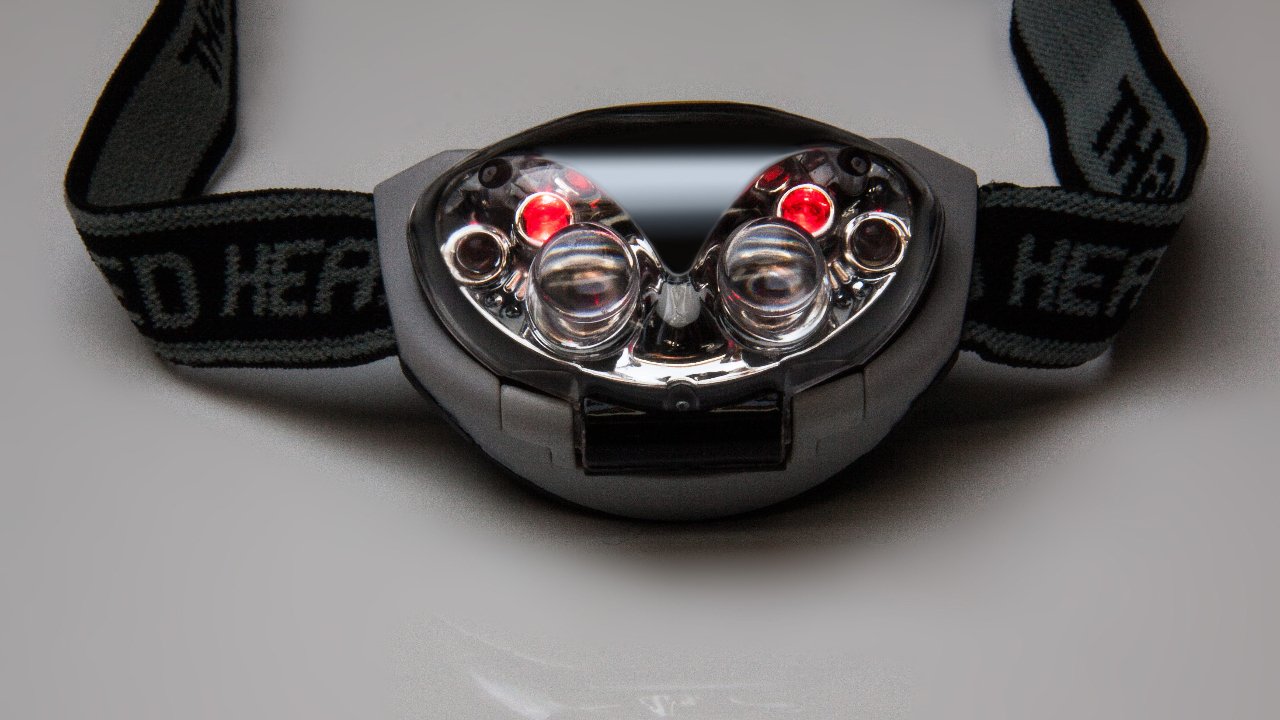
As you contemplate what headlamp to buy next, know that each one is different from another. For one, headlamps do not share the same brightness levels. And also, their light beam patterns differentiate, too.
Lumens
Lumens are a measure of the amount of light produced by light sources. As a general rule, the higher the number of lumens, the greater the light. That said, if the number of lumens is very high, a headlamp needs a lot of battery to power and run. Consider that, while choosing your headlamp.
Red Light
To adjust your vision at night, you need to illuminate your way with a red light. In addition, it will also enable you to see better peripherally than white light because your eyes can see way farther. A red light is also less distracting and annoying for fellow climbers, which is a good thing.
Wide Beam
Also known as flood beam or floodlight, a wide beam is phenomenal for shedding light on close activities, like when you're looking into your pack for supplies or a first-aid kit. As expected, a wide beam does not shed light up long distances.
Spot Beam
That is an excellent beam for viewing long paths. A spot beam is narrow and focused and is recommended for usage at night when trying to find your way out in the dark.
Adjustable Beam
A neat feature not available in every headlamp. An adjustable beam refers to the ability to alternate between a spot and a wide beam at any time. It is a handy function, and you should check it out when choosing your new headlamp.
Reactive Lighting
Reactive lighting automatically brightens or dips the light beam depending on the distance of an object that you might be looking at. Only newer lamps incorporate this technology, so, as with the adjustable beam, remember to seek it out.
IP Rating: Explained
An IP (Ingress Protection) rating indicates the level of resistance of gear to water and dust. The IP rating is followed by a couple of digits and occasionally a letter. According to the IEC 60529, an International standard organization, it denotes the protection provided by gear against dust, water, and accidental contact in electrical enclosures—the latter, however, doesn't apply to climbing but good to know nonetheless.
The standard's purpose is to inform consumers with detailed information about their product and how protected they are against water accidents, rather than just brandishing them with a vague term, like waterproof.
The IP letters, as mentioned above, follow two digits that indicate compliance with the specific conditions. For instance, a headlamp might be IP67, meaning that it is protected from dust ingress and water immersion for up to 1-meter depth.
What IP Rating Numbers Mean
To help you out with IP ratings, we included the relevant table that summarizes the conditions of each rating.
First Digit: Solids Protection
The protection level offered by the enclosure against access to dangerous parts, such as moving parts or electrical conductors, and the entry of solid objects into the said enclosure, is indicated by the first digit.
Second Digit: Liquids Protection
The second digit refers to the protection of equipment on the inside of the enclosure against hazardous ingress of water.
IP Rating Reference Chart
If you need assistance to decide which IP rating is best for you, take a look at this chart.
Size and Fitting Guide
Weight
Nobody fancies carrying something as heavy as a brick in their backpack or, worse, on their head. Therefore, weight is super important when deciding what climbing headlamp to purchase. However, heavier headlamps come with long battery life and a higher lumen output, too.
Generally, headlamps don't weigh over 7 ounces (0.2 grams). So, noticing weight differences between headlamps is rare. That does happen if you opt for high-end and very powerful models. Some of them also come with external battery packs and top straps, making them even heavier. As expected, these lamps are for particular needs, such as highball bouldering, rather than day hikes.
Fit
If you are going on a long climbing trip, you have to make sure that your headlamp fits nicely and comfortably.
A number of lamps have an excellent weight distribution and place the Lithium-ion battery box behind the head. Others, however, provide extra support in the form of a strap, stretching from the front to the back. A head strap might add that extra stability for the last climb, but it could also prove uncomfortable for others.
On top of that, headlamps may come with a tilt option, so you can move the headlamp manually. In this way, it is easy to see around. In other words, tilting headlamps make climbers feel in control.
How to Choose the Right Climbing Headlands - Things to Consider/What to Look For
Battery Options
One of the most crucial parts of using a headlamp when climbing is making sure it has enough juice when you really need it. Consequently, you ought to know how long your battery will last to make your life easier, ensuring your safety.
Types of Batteries
There aren't many different power options when it comes to headlamps. It boils down to choosing between standard and rechargeable batteries. Some opt for carrying a spare, separate set of AAA batteries to power their headlamp once it runs out.
Others, however, favor rechargeable headlamps, so they do not need to change batteries and keep purchasing fresh ones.
That said, some make the best of both worlds by using both a rechargeable battery and regular AAA batteries. If one battery type runs out, climbers can still use the headlamp by powering it with the second battery option.
Run Time
Most headlamp manufacturers include an estimation of how long their headlamp will run. However, there isn't any particular industry standard specifying how manufacturers came up with this claim, and if they tested it. Often, lamps might last a bit longer than claimed run-time, but as their battery runs out, their brightness dims.
Comfort
A comfortable headlamp is indispensable to a successful climb. If you are going to have something constantly on your head, it should be comfy, at least. So, focus on finding one you enjoy using instead of a functional one.
Therefore, pay close attention to weight, size, strap configuration, and material to find the lamp that fits you best.
Waterproof and Dust Resistance
Make sure that you purchase a headlamp with at least some level of water resistance and dust protection. Headlamps resistant to water or dust show an ingress rating classifying how much protection against water they withstand.
A rating of IPX-3 or above denotes that the headlamp can withstand a heavy downpour. Likewise, IPX rating guarantees that dust will not enter your device. But if swimming or diving would be part of your approach, look for an IPX-7 or more rating in case you have to submerge the headlamp in water.
Pivoting Mount
A pivoting mount is not necessary, but it is convenient. It enables climbers to aim their light better once the headlamp is fastened and secured on the head. It is also adjustable, providing a greater angle.
Control Type
Headlamps come with small switches that are usually hard to press, especially if you are wearing gloves. For this reason, a headlamp with just one button that turns it on or off, moving between modes, might be the best choice.
Locking System
A locking system is superb to have. What it does is ensures the headlamp will not turn on, on its own accidentally, as it bounces inside your pack, draining the battery. You would not want to arrive at the crag only to find that your headlamp has no juice.
Battery Indicator
That is a display panel showing the amount of power of your headlamp. The battery indicator will tell you when you have to replace the batteries in your headlamp or charge them. This is a very handy feature to look for on a headlamp.
Attachment Options
Some headlamps using four batteries may have a battery pack attachment with a cable running from the said pack back to the headlamp. These headlamps feel a bit lighter but clunky, too. In addition, removable top straps are also offered from some models to increase stability and add support.
Headlamp Brightness Modes
The best headlamps offer a variety of light and brightness modes. These are:
Strobe
That mode (also known as Flash) is for emergency situations. It behaves as a blinker, giving a safety signal when you're in trouble. Some headlamp models offer a fast or a slow flash rate, too.
Low
The standard brightness mode, used for most activities, like walking on a rugged trail in the dark or climbing on the wall early in the morning.
Mid
A higher brightness mode than low. It can be used when it is sunny, and you need to check something specific on the route.
High
Also called max, high-mode is fantastic when extra powerful light is necessary.
Boast
It is found only in select models. Also known as zoom, this feature projects an incredibly intense light beam for ten or twenty seconds. The only negative is that it drains the battery fast.
Top 6 Climbing Headlamps
1. Black Diamond Spot Headlamp


The Black Diamond Spot is a tremendous headlamp that can be considered value-for-money. It offers high-quality light, top-notch optics, and a distinctive flood beam. For example, when the spotlight mode is on, the Spot offers dynamic performance. Likewise, the flood beam spreads light over evenly, illuminating every object, sharp rock, or gap.
The Spot's beam is so good that it stands out from the competition by a large margin. Therefore, this headlamp is incredible in close proximity.
Like most headlights, the Spot has a single button to access its features. That is super handy when you wear gloves. To access the different beam modes, you need to single, double, or tripe click said button. For more advanced actions, you have to resort to pressing and holding it.
The Spot is also waterproof, which is excellent. It claims to have IPX8 waterproofing, so it should be alright for 30 minutes or so when submerged to a water depth of up to 1 meter. Therefore, submerging the headlamp underwater or carrying it in wet climates is an option.
On top of that, the Spot is very durable and lightweight, too. It is one of the lightest lamps as it weighs just 3.1 ounces (89 grams). If you consider the lightning features, then the Spot is also so low in weight is super impressive.
However, the headlamp does not have a good burn time. It could have been way better, as lower-priced headlamps offer much more battery power. The Spot may claim thirty hours of battery life when the high mode is on, but that seems like a stretch, at least, according to our testings.
Nevertheless, the Spot is a high-quality headlamp. Sure, it would be nicer if marketing claims, especially about the battery life, matched real-life performance, but still, the Spot packs lots of lightning features into a compact package.
2. Petzl Actik Outdoor Headlamp

This is a good (if not great) headlamp with way above-average performance. It delivers on almost every category that we value, such as durability, design, and ease of use. The headlamp is bound to offer reliable and solid performance for seasons to come.
It is really such a quality light. The only drawback is the price. The Actik is slightly expensive, and there might be better options in this price range available on the market, offering similar light features.
One neat thing about Actik is that it is so easy to use. In fact, it is among the simplest headlamps to use. You can operate it when wearing gloves, as, to turn it on, you press one button. It has tactile feedback, meaning that with one click, you get low-level lightning. That is perfect for light reading in the camp or night walks.
Next, two clicks offer medium brightness, which is the mode that most climbers use. Three clicks activate high-mode, a dynamic and vibrant beam. Finally, by pressing and holding the button, the LED becomes red, resembling a taillight.
As a side note, the high beam shines up to 88 meters. Those are some superb optics there, as no path remains in the dark with the Actik.
The Actik has some issues with battery life, especially when it comes to high-mode. This headlamp's battery power lasts less than two hours if high-mode is on. That is a bit disappointing, to be honest.
That said, the Actik is an impressive headlamp. Its simplicity, durability, and quality are unparalleled. If it had a lower retail price, it would make an almost perfect light choice.
3. Black Diamond Sprinter Headlamp


The Black Diamond Sprinter is well-designed, offering a top-notch performance in nighttime climbing or even trail running, for that matter.
One of the coolest things about it is that it has a rechargeable battery. You definitely don't want to find yourself running out of juice when you need to use your headlamp, right?
The Sprinter offers up to three and a half hours of constant light in high mode, which is superb, considering its sheer beam output. On that note, the lit beam spreads light evenly and lights up paths and rocks, making it clear to spot sharp edges. So, we are talking about some powerful lumens here.
Construction-wise, it is durable, almost unscratchable. And it is waterproof up to 1 meter, too. The headlamp consists of a top strap. In this way, the battery pack stays at the back of the head, helping balance weight between the back and front. Consequently, the Sprinter is comfy and stable during climbs.
To use the headlamp is simple, as there is only one button. Even if you have your gloves on, you can still press the button and adjust or dim the beam light.
One particular feature that we love about the Sprinter is the red light. The headlamp features rear-facing flashing red taillights so fellow climbers can see your position on the wall at night. The taillights also guarantee safety from passing cars when returning to the camp.
One minor downside is that the battery life feels short. It would be great if it could last a bit longer. That said, it still provides enough light.
In conclusion, this headlamp is optimized for nighttime climbing. It is easy-to-use, waterproof, rechargeable, comfy, and has just the right amount of heaviness. The Sprinter also offers a powerful front beam light and ensures climber safety with the rear-facing flashing red light.
It is simply phenomenal!
4. Princeton Tec Apex Pro Headlamp

The Princeton Tec Apex Pro is a great headlamp offering a super-bright spot beam. It also provides climbers with decent proximity light. On top of that, it is waterproof for up to 1 meter. And it is lightweight, too, without being uncomfortable.
However, it eats the two rechargeable lithium-ion batteries fast, and the battery light is a bit poor when selecting the bright mode. Therefore, the Apex Pro is good. But not remarkable.
Where Apex Pro really impresses is in high beam mode. It can shine up to ninety-four meters distances. The headlamp, therefore, outshines many of its competitors with such an impressive beam. But the brightness does not sustain. It quickly tapers down.
The reason for this has to do with the battery life. While it begins with a powerful beam, after about an hour, the beam is down. Also, the Ape Pro buttery power will last climbers a little over three hours during the high beam mode.
Also, it is not a heavy headlamp. Apex Pro's lithium-ion batteries reduce excessive weight, but they are expensive to purchase. So, that might be a concern for climbers on a tight budget.
That said, if you are looking for a powerful beam that can shed light on long distances, the Apex Pro is a fantastic choice. Just be prepared to turn it off quickly after using it, as, after constant use, the beam starts dimming.
5. Coast HL7 Headlamp


The Coast HL7 is a very good headlamp with lots to offer. For starters, it has a powerful beam that shines up to 112 meters and fantastic floodlighting. Climbers will not take long to learn how to use it, too.
Since 2012, when the HL7 was introduced, there have been some upgrades in its performance. The design is unchanged, though, but the newer versions of the headlamp are brighter than ever before.
On top of that, the optics (and the lumens) are superb. They will definitely get out of a challenging situation, like when you have to view the surrounding wall area to avoid injuring yourself. The beam is slightly straight, though, and not super wide as in some competitors.
Another excellent thing about the HL7 is the flood lightning. And it is simple to use. The only thing you have to do for zooming in and out is to rotate the front lens.
And as with most lamps featured on our list, the HL7 can be turned on by pressing a simple button. That is so convenient. Additionally, climbers might use the level on the back of the battery pack for changing the brightness and control zoom features by the control system that is on top of the lens.
There are not many downsides to the HL7. Almost none. The only issue that we had with it has to do with its weight. It is slightly heavy (4.5 ounces or 127 grams). The battery pack in the rear feels bulky also, but in no way makes the headlamp too uncomfortable.
As for the battery life, so far, so good. Running just over the three-hour mark in high-mode constitutes the HL7 average in terms of battery power. On the contrary, in low-mode, the headlamp lasted twenty-three hours, which is pretty great.
The HL7 is a compelling headlamp, offering top-notch performance. And it has a very approachable price. For climbers looking for a high-quality, bright light with a long beam, the HL7 could be the best headlamp for rock climbing on the market.
6. Petzl Actik Core Headlamp

The Petzl Actik Core is one of the most popular headlamps. There are many good reasons for that.
For starters, it is easy to put on. Also, the lightweight design makes it comfortable without being stretchy, too tight, or unnecessarily heavy. On top of that, the Actik Core is powered by a rechargeable battery. And if it runs out, you can use AAA batteries to juice the headlamp up.
The Actik Core has a super-bright beam powered by 350-lumens. They might not seem much, but they do help when you need to find your way after dark. Three are the settings that climbers can choose. Even on the lowest, when the weak 100-lumens beam is activated, the Core is bright enough for walking back to the camp from the wall. Further, by pressing down and holding Core's single button, the beam turns red. You can alternate between a flashing beam and a red beam.
The battery lasts long but not as much as we would have wanted it to. On the brighter setting, it lasted almost two hours before needing recharging. However, on the regular brightness mode of 100-lumens, the battery lasts up to seven hours, which, quite frankly, isn't bad at all.
That said, switching between beam modes is not as easy as it may sound. For instance, you cannot choose the middle beam mode, and shortly after, alternate to the bright beam. You have to start from the low mode, first. Then, move to the middle mode and, finally, to the high mode.
The technology isn't there, yet, to cope with you changing your mind. Also, changing beams while wearing gloves is slightly challenging too.
At the end of the day, though, the Petzl Actik Core is one of the best headlamps. With a vibrant beam, a rechargeable battery, and a lightweight design, it is a solid light choice.
Conclusion
Climbers can only put on one headlamp. Make sure that the one you pick fits your needs best.
Even though all our headlamp choices here are excellent, we're going to pick one that, in our opinion, stands out from the competition.
The best climbing headlamp, hands-down, is the Black Diamond Sprinter. It is a solid performer with a high-end light output, waterproof construction, durable, and offers several quality light beams. The Spot could be considered as the best rechargeable headlamp, too. Forget about carrying AAA batteries to your excursions.
Furthermore, the Petzl Actik Core is also a good headlamp option. It is so simple to use, and it is very durable, as well. Lumens-wise, it features a long high beam and superb flood light. If it had a bit better burn time, we could see ourselves picking the Actik instead of the Spot as the best headlamp for climbing.
We hope our recommendations have helped you find the best climbing headlamps for your next route.