
Building a good rack is important if you want to up your climbing game. The gear you bring with you on your route should keep you safe. For this reason, choosing strong and durable gear is of utmost importance. People love to talk about cams, quickdraws, and carabiners, and these can take up a lot of space during discussions on how to build a rack. However, for trad, alpine, and aid climbers, slings and runners are just as important. Using the best climbing slings can help you move quickly through the mountains, and shave weight off your rack. They are used to create directionals, reduce rope drag, build solid equalized anchors, as direct protection around natural anchors like trees or horns on the rock, and much more.
What Are Slings?
Since slings are fabric, they are not as abrasion or water-resistant as metal climbing hardware and need to be replaced more often. Most slings are made of flat webbing, as opposed to tubular cordalette, and modern slings are usually sewn into loops using heavy-duty bar tack stitching. All climbing slings are rated to a minimum of 22 KN of force.
Climbers choose to rack slings in different ways. They can be made into alpine draws and worn off the harness, or they can be slung over the shoulder. Your style will depend on your preference and the amount of space available on your harness’ gear loops.
Climbing Runner vs Sling
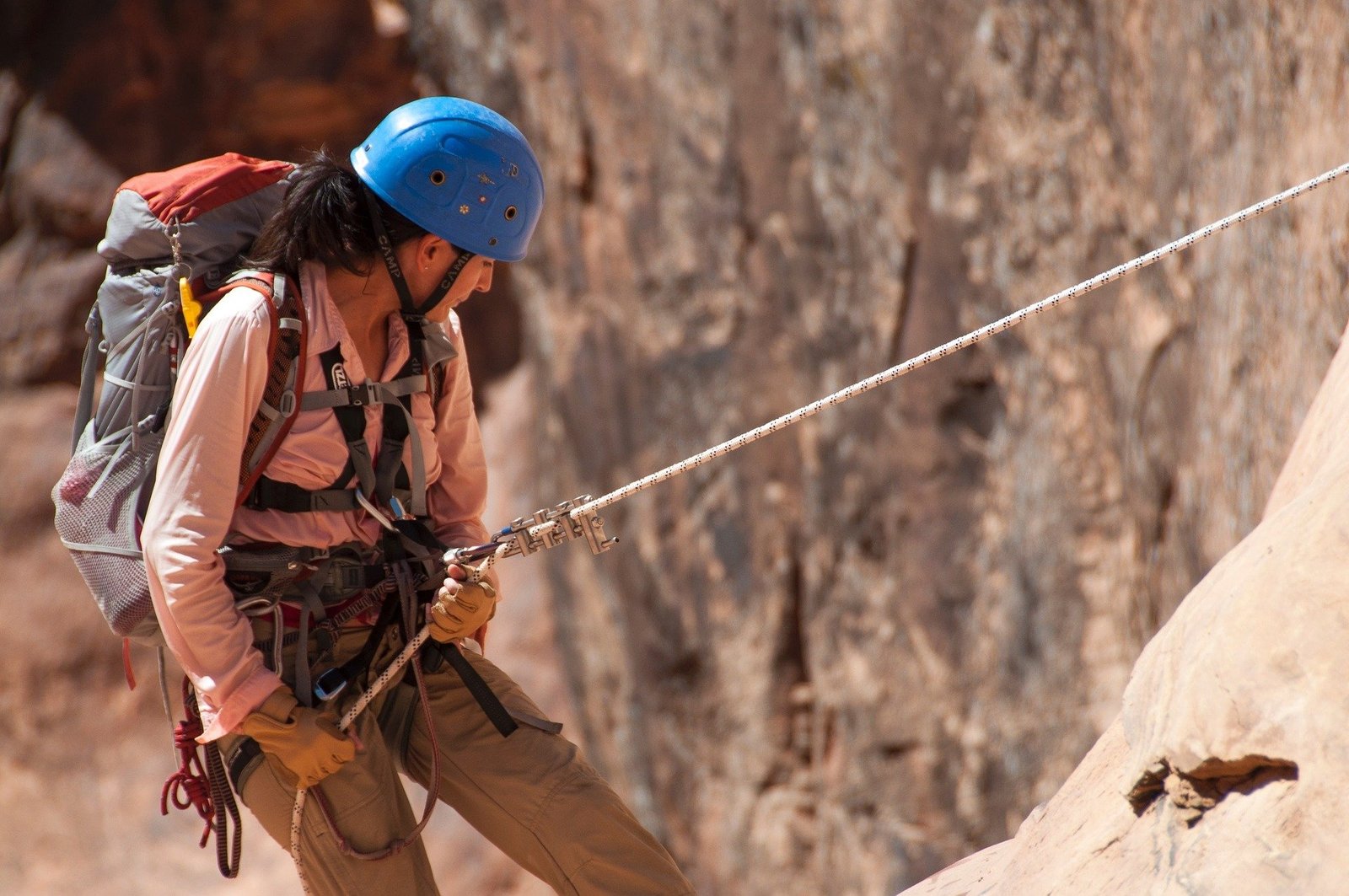
What is the difference between climbing slings and runners?
At the crag, you might hear these two words being used interchangeably. A climbing sling is a loop of webbing which has a range of uses and applications. Technically, a runner is when a rock climbing sling is used to connect two carabiners and make an alpine sling or quickdraw.
The ideal slings to use as runners are relatively thin, these can be doubled or tripled over to adjust the length of the runner. Dyneema runners are quickly becoming more popular than nylon, because of their smaller width. That said, most people switch back and forth between the two terms and we will do that as well in this guide.
Slings come in different sizes and are usually measured in centimeters. Many runners come in either single length (60 cm) or double-length (120 cm). They also come in a variety of widths, ranging from skinny 10mm to wider 18mm.
Nylon vs Dyneema
Rock climbing slings are typically made of either nylon or Dyneema (sometimes called Spectra or Dynex). Each material has its own pros and cons.
Nylon runners tend to be heavier and bulkier than Dyneema slings. A nylon sling will also absorb more water than a Dyneema sling would, and nylon isn’t as resistant to UV light. However, nylon runners tend to hold knots better than Dyneema slings and are also more affordable.
Dyneema slings are more cut and abrasion-resistant than their nylon counterparts. One important factor to consider is that a nylon sling will stretch slightly under load, whereas a Dyneema sling will not. In situations where the rope isn’t giving much dynamic stretch, nylon is a superior sling material because it will lessen the force of a potential fall.
Our Recommendations for the Best Climbing Slings
We looked at many slings and took different factors into consideration when choosing the best slings. Keep in mind there is no singular “best climbing sling” for every application. Certain runners work better to build anchors, while others excel as runners for alpine quickdraw.
The slings you choose will depend on the style of climbing you practice, and you might want to integrate a variety of slings into your rack for optimum performance.
Check out our picks for the best slings below.
1. Petzl Pur’Anneau: Best Lightweight Sling


The Pur’Anneau by Petzl is one of the lightest rock climbing runners on the market. They come in standard single and double length, as well as quadruple for most alpine applications.
This 10mm Dyneema sling will significantly cut down the weight of your rack if you use it in lieu of a thicker nylon alternative. The Pur’Anneau is also thinner than most other 10mm runners, so in situations where lightweight and low bulk are a priority, it shines. The small difference in weight adds up, especially if you carry lots of slings in your rack.
The biggest drawback of the Pur’Anneau is the cost, which is higher than pretty much the rest of its competition. It also tends to be more difficult than other slings to untie, especially after it has been loaded or fallen on.
We believe it is well suited to alpine climbing and difficult sport routes that require extenders.
2. Black Diamond Dynex Runner: Best Value Dyneema Sling


The Dynex runner is a top performer dollar for dollar. They are durable, decently light, handle well, and can be untied easy enough.
The Dynex (essentially Dyneema) slings come in half, single, double, and quadruple lengths for different applications. Black Diamond conveniently color codes these runners so that you can easily identify them on the route and never fumble around trying to find the correct length. They offer a good mix of features as a midrange sling made from Dyneema and will allow you to climb with confidence.
Considering their price, these climbing slings are very well rounded on performance and offer a lot of bang for your buck. Black Diamond also makes a 14mm version of the Dynex runner for those who would prefer a slightly thicker lightweight runner.
If you are looking to build a rack using slings that offer a mix of performance and price saving, these are a great choice.
3. Black Diamond 18mm Nylon Runners: Best Budget Slings


Sometimes the best option is the one that’s easiest on the wallet. These nylon slings are a great choice for affordable and trustworthy protection on the wall. These nylon runners are greatly versatile and they come in half, single, double, and quad sizes.
One benefit of using budget slings is that you won’t worry too much about replacing them should they get damaged or frayed. Buying nylon runners when you first build a rack can help you save money upfront. Runners wear out more quickly than other gear, so you will always have the opportunity to upgrade later on. It can even be a good idea to buy one nylon sling to use in situations where you know you might lose it or leave it on the route.
Like the Black Diamond Dynex runners, the 18mm nylon runners by BD are color-coded to help you select them out of your rack with ease.
Although not as lightweight as other models, they will still do what is needed and untie well enough. Nylon webbing has a higher heat resistance and resists melting from rope friction, making it a reliable sling for multipitch sport climbing. The one situation where they will have a serious disadvantage is in alpine and winter climbing where they will wet out and freeze easily. For this reason, they are recommended for sports and trad climbing more than alpine.
4. Sterling Dyneema Sling: Best Slings for Alpine Draws


If you’re climbing hard and in the alpine or on long difficult trad routes, you are going to want a runner that excels in performance. Alpine draws need to fold nicely, feel supple and light, and still stand up to hardcore abrasion and potentially giant falls.
The Sterling Dyneema sling is a great choice for climbers who frequently need to make extenders in challenging conditions where speed is key. They are lightweight, handle excellently, and are super durable. All of these are qualities we thought were important when selecting a sling for an alpine draw.
The bar tack has a rubberized cover which makes it much easier to slide through the carabiners when extending your draw. The rubber coating also makes the runner even less water absorbent on the stitched area, which is important in alpine and winter conditions. For this reason, it also comes highly recommended for use on routes where snow and ice are a factor.
The Sterling Dyneema Sling is more expensive than other options, but the small touches make it the top choice for alpine draws.
5. Beal Dynamic Sling: Best Sling for a PAS (Personal Anchor System)

Oftentimes, people will buy a sling in order to use it as a personal anchor system (PAS). Having a PAS allows you to quickly and safely attach to an anchor once you arrive. The downside of using a regular sling made of Dyneema or nylon webbing is that neither material has much dynamic stretch. This means that they will increase the force factor during a fall, and also jerk you around quite uncomfortably. Their low shock absorption makes them a potential point of failure on high force factor falls.
We recommend using the Beal Dynamic Sling as an alternative to the traditional options for use as a PAS because it fixes the problems we discussed above. It is essentially a short piece of climbing rope that is sewn together in a way that is similar to the bar tack stitching on a regular sling. This makes it a far superior option to nylon climbing slings for use as a PAS where you can fall or be pulled by a partner taking a fall.
The Beal Dynamic sling isn’t designed for use as part of an alpine draw, it is much heavier and bulkier than other options. Similarly, it won’t work well for anchor building or tying off from natural protection. This sling was exclusively designed with being used as a PAS in mind. If you use a PAS often, it might be worth it to consider adding the Beal Dynamic sling to your rack.
6. Metolius Ultimate Daisy Chain: Best Daisy Chain


Daisy chains: they aren’t slings, but they aren’t exactly not slings.
Climbers are usually somewhat divided on their use. Some say daisy chains are dangerous and can lead to things like improper anchor building. While this can be true, they also have some appropriate uses. They are used as emergency aid devices, organizers for gear on large routes, a PAS, and much more. For those who use them often, daisy chains are a valuable piece of equipment that saves time and is easy to use.
The Metolius Ultimate Daisy Chain is the only daisy chain that has passed the CE/UIAA standard and is rated to 22KN, the minimum strength requirement every climbing sling must demonstrate. This is accomplished by using separate loops of Dyneema webbing that are stitched around each other, instead of one long loop that has been sewn to itself several times. Each section is basically a mini sling sewn through two others.
The Metolius Ultimate Daisy Chain will work in any situation that would require a sling. While it shines in certain applications, it isn’t the greatest in others. Still, this versatile sling for climbing has a proven safety record and earns our top pick for daisy chains.
7. Mammut Contact Dyneema: Best Sling Overall


Our pick for the best overall climbing sling is the Mammut Contact Dyneema.
This sling rates favorably in many ways. It is highly competitive on price, lightweight, soft and supple, durable, and unties from knots well. No matter what type of climbing you practice, the Mammut Contact Dyneema sling will perform beautifully. It stacks up well against the most expensive slings in multiple areas of performance, and there isn’t really anything it doesn’t do well.
It is not the lightest Dyneema sling. The weight difference between these and the lightest sling (the Petzl Pur’Anneau) was marginal. It is also easier to take knots out of the Mammut Contact Dyneema than the Pur’Anneau or other lighter slings.
The Mammut Contact Dyneema costs more than the budget nylon slings mentioned, but the price difference isn’t huge as we consider it to be worth the extra money for the upgrade. It packs in so many features at such a great price.
No matter what kind of rock climbing you practice this sling is a great choice to use throughout your rack.
What To Keep In Mind When Shopping For Climbing Slings
While there is no single sling that is ideal for every application in rock climbing, there are definitely slings that will improve the quality of your rack over others. This in turn can actually have an effect on your climbing.
Lightweight
Always look for lightweight runners. There is virtually no situation where cutting down on weight won’t make your life more comfortable. Especially at higher levels of climbing, a few grams can mean the difference between falling off and staying on.
Material & Durability
Consider the materials when purchasing slings. There are some situations where nylon sling outperforms Dyneema, but that’s pretty rare. If you decided to go with our top pick, the Mammut Contact Dyneema, over something like the Black Diamond 18mm Nylon Runners, you would be able to save a considerable amount of weight at a pretty modest price. They also boast higher durability on average than any nylon sling.
Have Multiple Slings & Runners
Bring different slings with you depending on the applications you expect to encounter. Top rope, single pitch sport climbing may require a PAS or a few extenders, but that’s about it. Meanwhile, certain trad spots will require a variety of runners in different lengths. If you plan on using slings to hitch around natural protection, be sure to bring some extra long runners along with you.
A good rack usually incorporates several different lengths of runners. The bulk of the runners you buy should be either 60 or 120cm, but it’s important to carry longer runners as well. You can always tie a knot into a runner to decrease its functional length. There's no runner that is too long.
Inspect/Check
Make sure to inspect your slings frequently when you are climbing. A damaged sling can cause fatal accidents if it isn’t retired. There are many instances when slings can be cut, abraded, melted, or compromised. Slings are often used as a lifeline during climbing, so it’s important to make sure they are trustworthy and strong. New slings are significantly stronger than those which have seen several years of use. Luckily, they are the cheapest thing to replace on a rack.
Conclusion
That does it for our round-up of the best climbing slings and runners. We hope you found it informative and easy to follow. Check back soon for more reviews and gear tips for your next outdoor adventure!